

Awaab's Law in Scotland: A Practical Guide for Private Landlords
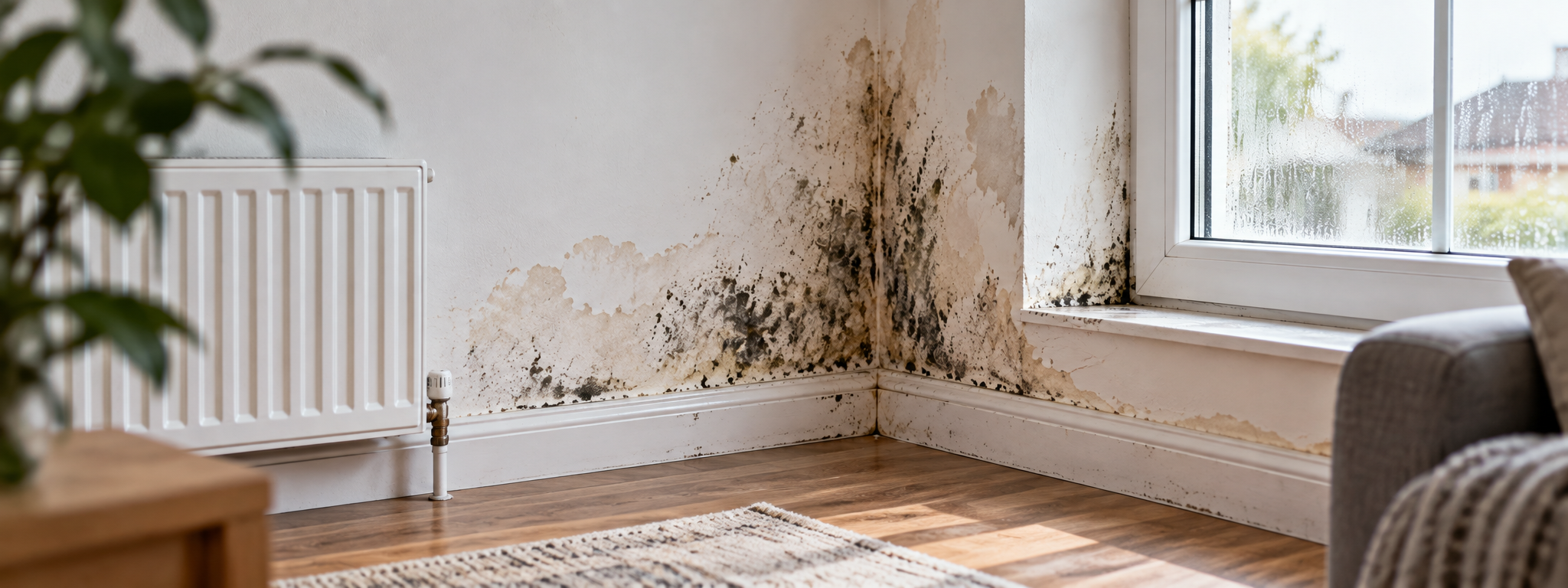
Picture a tenant sending you a photo of black mould spreading across the bathroom ceiling. Until recently, there was no set timetable for how quickly you had to look into it. Now there is.
Awaab's Law, formally the Investigation and Commencement of Repair (Scotland) Regulations 2026, came into force on 6 October 2026. It sets fixed timescales for how landlords in Scotland respond to damp and mould, and it covers private landlords as well as social landlords. The duties apply where the damp or mould affects part of the property you're responsible for repairing.
The law is named after two-year-old Awaab Ishak, who died in 2020 from a respiratory condition caused by mould in his family's home in England.
Here's how it works day to day, and what to have ready.
What happens once you know about damp or mould
Step 1: an investigation within 10 working days
A competent person needs to investigate within 10 working days, which works out at roughly two calendar weeks.
Step 2: a written summary within 3 working days of the investigation
Your tenant then gets a written summary within 3 working days of the investigation finishing. It should say who carried out the investigation, what they foundand whether the home is substantially free from damp and mould. If it isn't, the summary sets out what work is needed and the target timeframe. If no substantial damp or mould was found, it should explain why.
Step 3: repairs started within 5 working days
If substantial damp or mould is found, repair work has to start within 5 working days of the investigation concluding. Repair work can include temporary safety measures, specialist work and monitoring, as well as the final fix.
There's no fixed completion deadline for private landlords, but the work needs finishing as soon as reasonably practicable. As far as reasonably practicable, it should also keep the property substantially free from damp and mould from then on.
Five things that could catch you out
- The clock doesn't wait for a tenant to report it
The timescales start when you become aware of a possible problem, however you find out. That could be at a routine inspection, from a contractor fixing something unrelated, or from a neighbour raising a concern. It helps to make sure anyone visiting the property knows to flag damp or mould straight away. - You choose the investigator, and the judgement is yours
The investigator doesn't need a specific qualification. They do need to be someone you reasonably believe has the skills and experience to assess damp and mould and decide whether repairs are needed. The guidance suggests looking at their experience, professional background and knowledge of Scotland's housing standards. If the person you choose isn't up to the job, the responsibility still sits with you. - The written summary is down to you, even if someone else writes it
An agent or contractor can draft it, but the Scottish Government guidance is clear that the landlord has overall responsibility for producing and issuing it. - New mould means a new clock
The duty covers the issue that was investigated. If the damp or mould gets significantly worse or appears somewhere new, you'll need a fresh investigation and the timescales start again. - Delays need explaining in writing
If something outside your control stops you meeting a timescale, such as severe weather, travel disruption or not being able to get in despite reasonable attempts, you need to tell your tenant. Explain which step is delayed, why, and the new timeframe. Use your usual way of contacting them and think about their needs, for example whether the information should be in another language.
While you wait, you're expected to take reasonable interim steps, such as removing mould, fitting an extractor fan, applying sealant or monitoring the area.
What "substantially free" means
There's no fixed definition, so it's down to the investigator's judgement in each case. They'll look at how widespread and persistent the damp or mould is, whether anyone living there is more vulnerable to its effects, and what's causing it, so they can judge how likely it is to come back.
If the timescales are missed
A tenant can apply to the First-tier Tribunal for Scotland (Housing and Property Chamber) on the basis that the property doesn't meet the Repairing Standard. The Tribunal can issue a Repairing Standard Enforcement Order requiring the work to be done, and a Rent Relief Order restricting the rent until it is. Not complying with an order without a reasonable excuse is a criminal offence, and the council can carry out the work and recover the cost from you.
Letting in England?
Awaab's Law has applied to social housing in England since October 2025. It's expected to extend to private landlords, but no date has been announced yet.
A quick checklist
- a simple way for tenants to report damp and mould, with every report dated
- an investigator you trust who can attend at short notice
- contractors briefed to flag damp or mould on any job
- a written summary template that covers everything the guidance asks for
- records showing each step and when it happened
- regular inspections that pick up early signs
If you ever need to show you met the timescales, those records are your evidence.
How we can help
Your local Letting Expert can take this off your hands. Our Experts Full Management Service covers tenant reports, contractors, inspections and record keeping, so each step happens on time and there's a clear record of it.
If you'd like to see where things stand first, book a Property Health Check. It's a full review of your property's condition and compliance, with no cost and no obligation.
You might also be interested in

Sep 18, 2026
Should You Sell or Keep Your Rental Property?
Ask ten landlords right now whether they'd sell or keep their rental property, and you'll get ten different answers, often from people in almost identical situations. There's no single right answer, b

Aug 27, 2026
Tenant Fraud Is Rising Fast. Here's What Every Landlord Needs to Know
Most landlords who let a property in good faith assume the person applying is who they say they are. For a long time, that assumption held up reasonably well. Referencing checks were straightforward,